10 Symptoms Your Business Is Ready for an Automation Readiness Audit
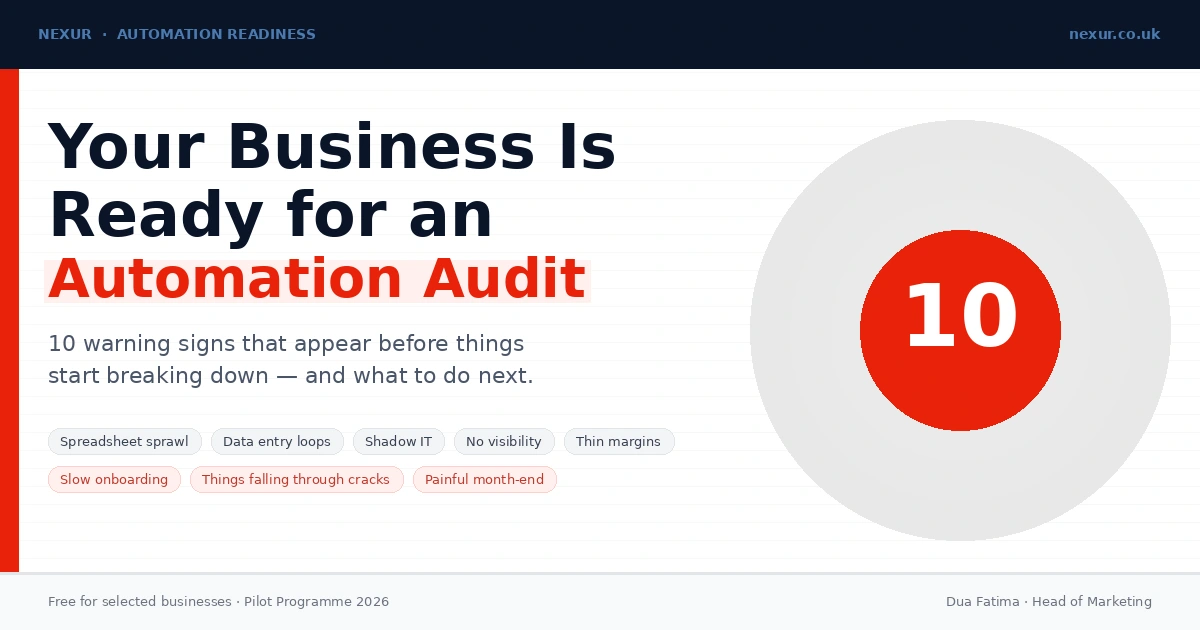
From spreadsheet chaos to duplicated data entry, here are the ten signs your business needs a structured automation audit before things get worse.

Every growing business hits a point where the way things are done stops working as well as it used to. Things slow down. Mistakes creep in. Your team works harder but progress feels slower.
Most business owners know something is off. Very few have sat down and worked out exactly what. Here are ten clear symptoms that it's time for a structured automation audit.
1. You Have Spreadsheets for Everything
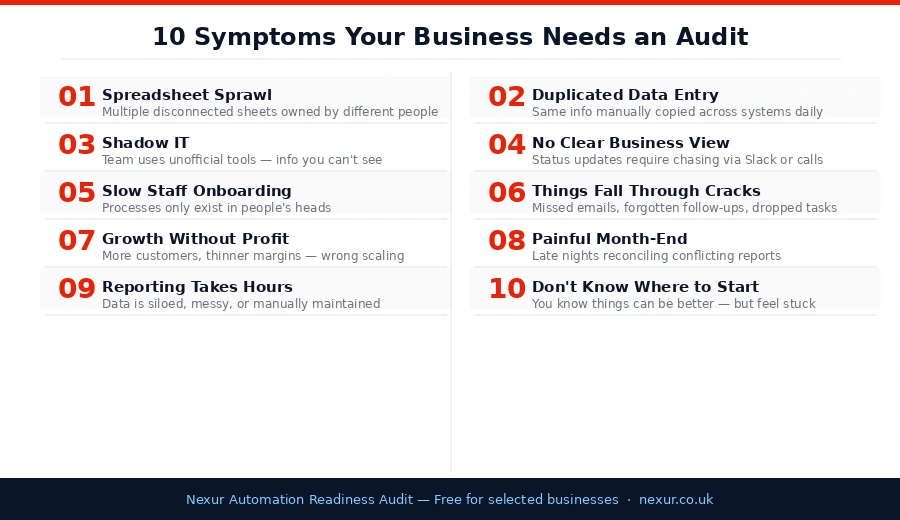
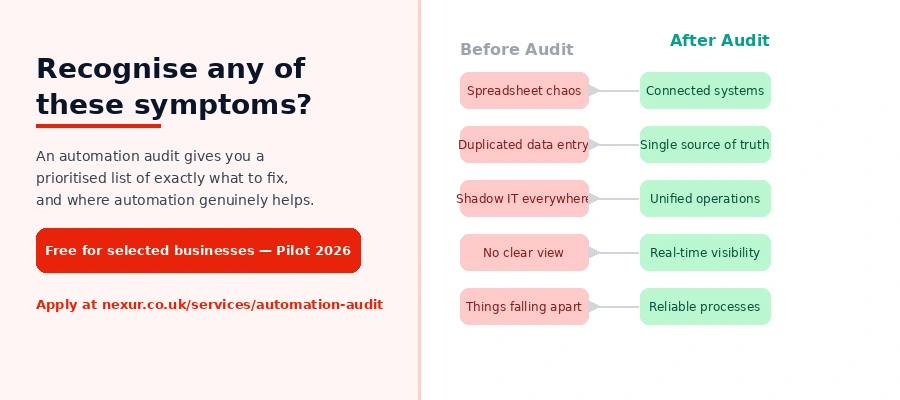
You've got a spreadsheet for leads, a spreadsheet for orders, a spreadsheet for tracking tasks, and a separate one for reporting. Each one is maintained by a different person and none of them talk to each other. This is called spreadsheet sprawl, and it's one of the most common signs a business has outgrown its current setup.
2. The Same Data Gets Entered More Than Once
Someone logs a sale in one system, then manually copies it into another. Then someone else copies it into a report at the end of the week. Every time data moves through human hands, there's a chance it changes. This is duplicated data entry, and it's costing you time and accuracy every single day.
3. Your Team Has Built Their Own Workarounds
People are using personal Google Sheets, WhatsApp groups, or their own tools to manage work because the official systems don't do what they need. This is called shadow IT. It means the official view of your business is incomplete, and important information is hiding in places you can't see.
4. You Can't Get a Clear View of the Business Without Chasing People
If getting a simple status update requires three Slack messages and a phone call, that's a problem. A healthy business operation should give you a clear picture without you having to chase it.
5. Onboarding New Staff Takes Far Too Long
If it takes weeks to get a new team member up to speed because processes only exist in people's heads, that's a structural problem. Undocumented processes are fragile, slow, and impossible to improve.
6. Things Keep Falling Through the Cracks
Emails that didn't get replied to. Follow-ups that nobody sent. Tasks that everyone assumed someone else was doing. These aren't people problems. They're process problems.
7. You're Growing, but Margins Are Getting Thinner
More customers, more revenue, but not more profit. When growth costs you proportionally more each time, it usually means your operations are scaling the wrong way by adding people instead of improving processes.
8. Month-End Is Always Painful
If closing out the month involves several late nights, hunting for missing numbers, and reconciling conflicting reports, your finance and operations aren't well connected. This is both a symptom and a risk.
9. Your Team Spends More Time Reporting Than Doing
If generating a report takes hours instead of minutes, your data isn't set up well. Reporting should be fast. If it isn't, the underlying data is messy, siloed, or manually maintained.
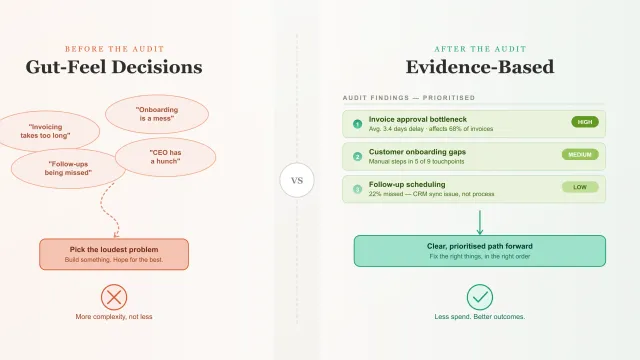
10. You Know There's a Better Way, but Don't Know Where to Start
This is perhaps the most honest symptom of all. You've had the conversation. You know things could run better. But every time you try to dig in, it feels overwhelming, and you don't know what to fix first.
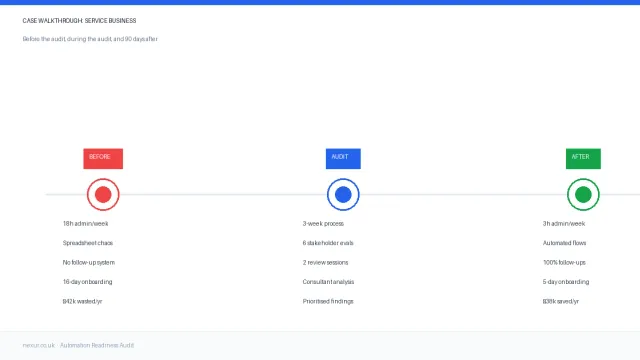
That's exactly what an automation audit is for.

Featured
Spot the Leaks Before They Cost You More
Spreadsheet chaos, missed follow-ups, and painful reporting aren’t small issues, they’re signals. Get a clear diagnosis of where your operations are breaking down and what to fix first with a structured automation readiness audit.
Apply for Free AuditKeywords