From Gut-Feel to Evidence: How an Automation Audit De-Risks Your Next Project
Most automation projects fail because they start with assumptions, not evidence. Here's how a structured audit changes that.

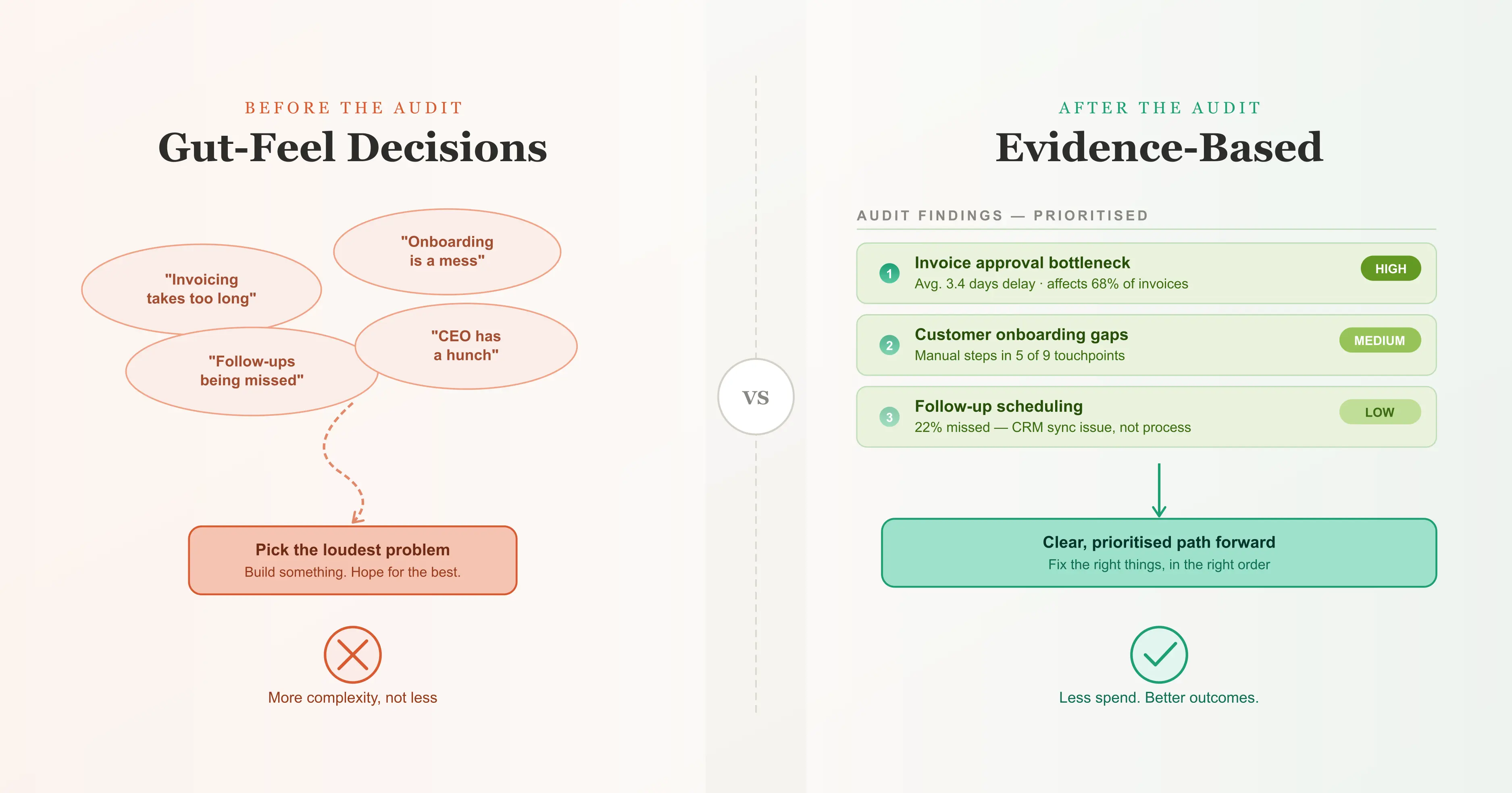
Most business owners have a sense of where the problems are. Someone in finance says invoicing takes too long. Someone in ops says onboarding is a mess. The CEO has a hunch that customer follow-ups are being missed.
So the business picks the loudest problem and builds something to fix it. Sometimes it works. Often it doesn't.
The reason isn't usually the technology. It's that the problem wasn't properly understood before the build started.
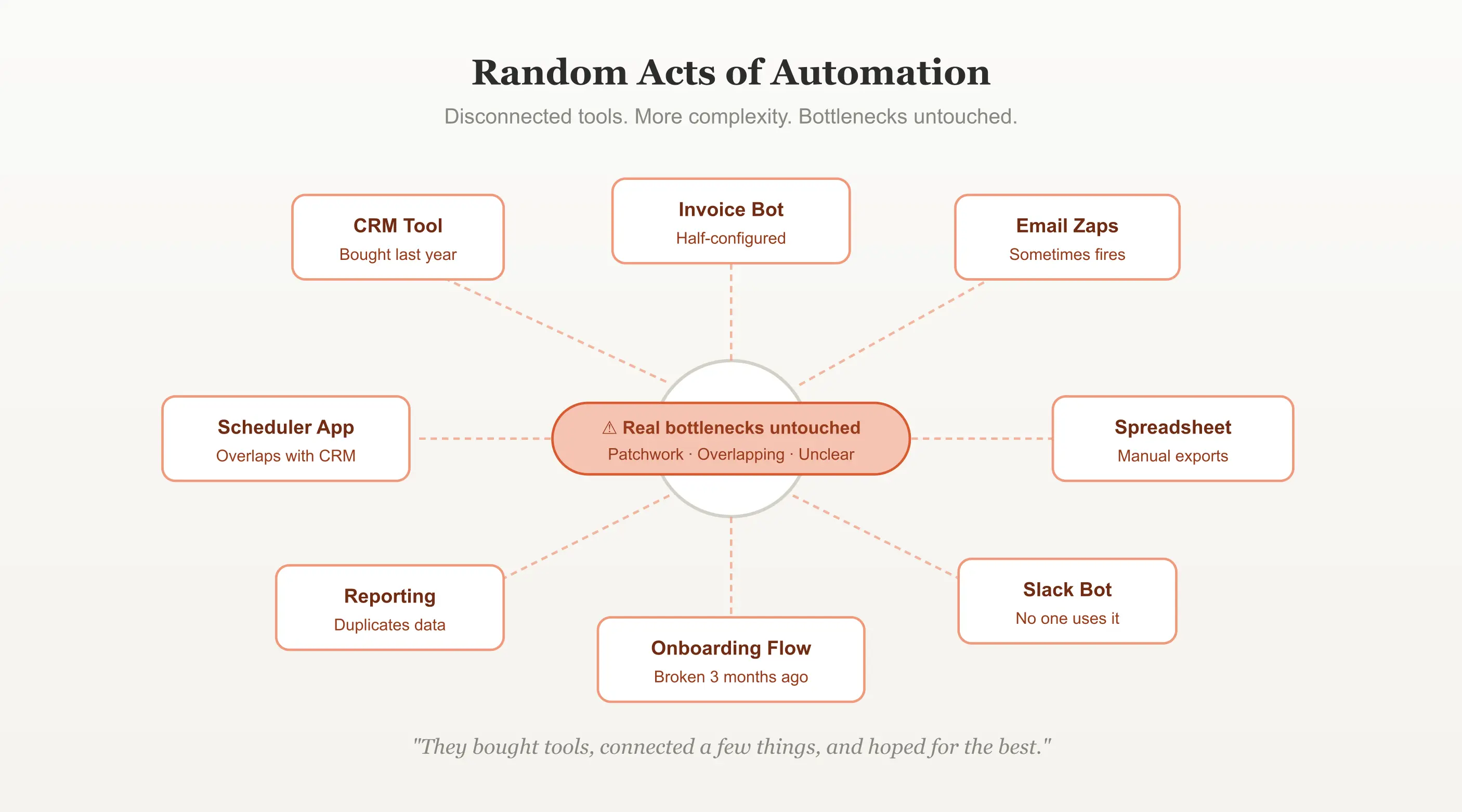
What "Random Acts of Automation" Look Like
Random acts of automation happen when a business automates without a plan. They buy a tool, connect a few things together, and hope for the best. Sometimes it helps a little. But the real bottlenecks often don't get touched, and the business is left with a patchwork of tools that don't quite work together.
The result? More complexity, not less.
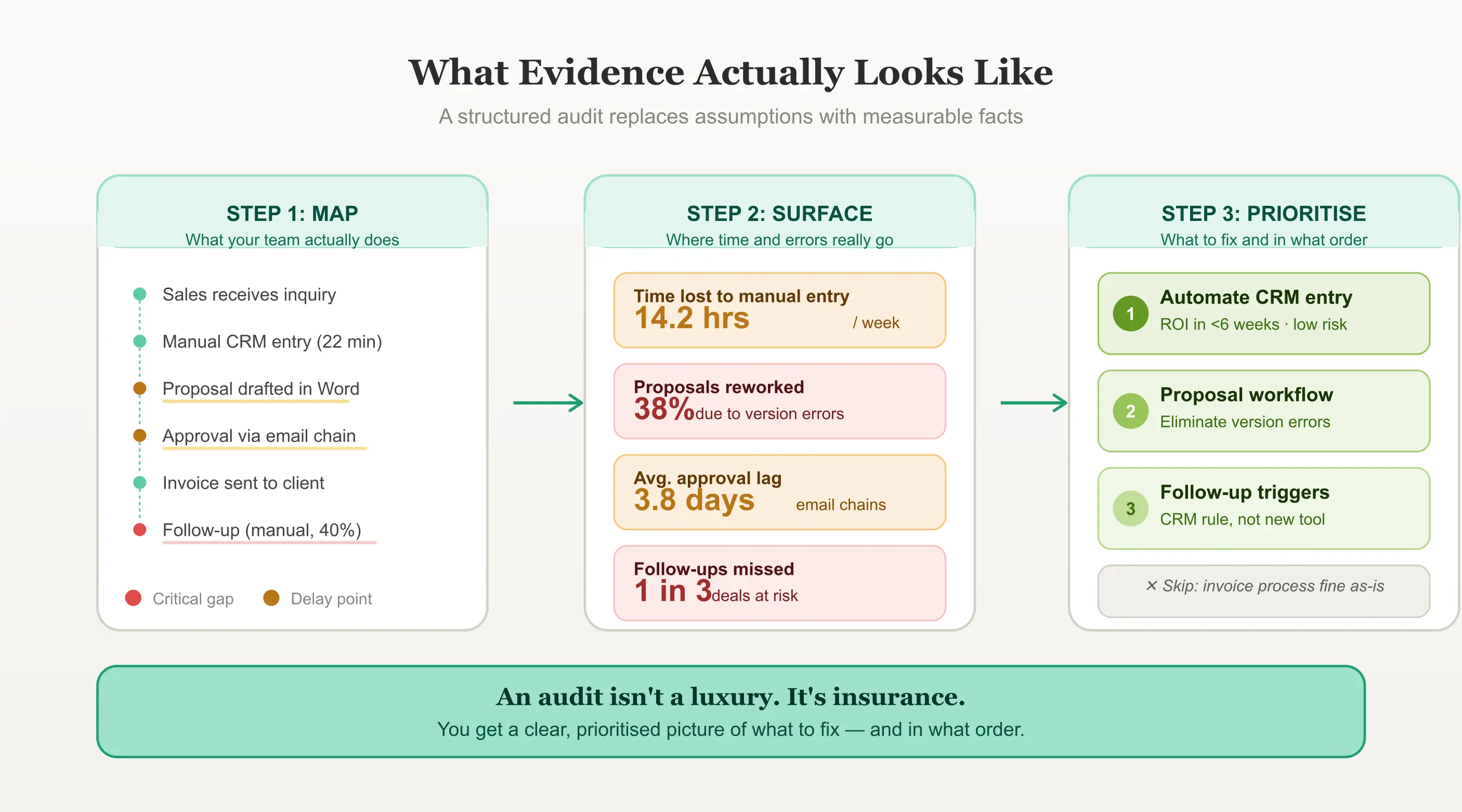
What Evidence Actually Looks Like
A structured audit replaces assumptions with facts. It maps what your team actually does, not what the process document says they do. It surfaces where time is really going, where errors are really happening, and where the dependencies between systems and people actually lie.
This gives you something far more valuable than a shortlist of tools to buy. It gives you a clear, prioritised picture of what to fix and in what order.
The Difference in Outcomes
Businesses that go into automation projects with audit findings behind them make better decisions. They spend less. They avoid overbuilding. They don't automate a process that shouldn't exist at all.
Businesses that go in blind often spend months and money on solutions that solve the wrong problem, then wonder why things haven't improved.

Featured
Stop Building Automation on Assumptions
Most automation failures come from guessing instead of understanding real workflows. Use a structured audit to replace gut-feel decisions with operational evidence, so you only automate what actually delivers impact.
Get Evidence-Based AuditKeywords